
Can You Bet In-Play on Greyhounds in the UK?
Yes — in-play greyhound betting is available in the UK, but in a much more limited form than in-play markets for sports like football or tennis. The practical reality of a greyhound race — approximately 30 seconds from traps to finish — means the window for live betting is extremely narrow, and most of what passes for “in-play” on fixed-odds bookmaker platforms is better described as a cash-out facility on a pre-race bet rather than a genuinely open live market.
The distinction matters. On Betfair Exchange, genuine in-running markets are available for supported GBGB greyhound meetings: these are live markets where you can place new back or lay bets while the race is in progress, with prices updating in real time based on the unfolding race. On fixed-odds bookmaker platforms, the in-play experience for greyhounds is typically limited to the ability to cash out an existing bet during the race — the market is not open for new bets once the race starts. Most major bookmakers suspend their greyhound markets at the off and do not reopen them until the race is settled. The cash-out button that remains available during the race is not a new bet; it is a settlement option for the position you already hold.
This distinction has practical consequences for how you approach live greyhound betting. If you want to genuinely trade a greyhound race in progress — placing a new bet based on what you see happening from the traps — you need Betfair Exchange and a supported meeting. If you want to manage an existing pre-race bet during the race using cash out, most major licensed bookmakers provide that functionality for greyhound markets. These are different activities and require different preparation.
How In-Play Markets Differ for Dogs
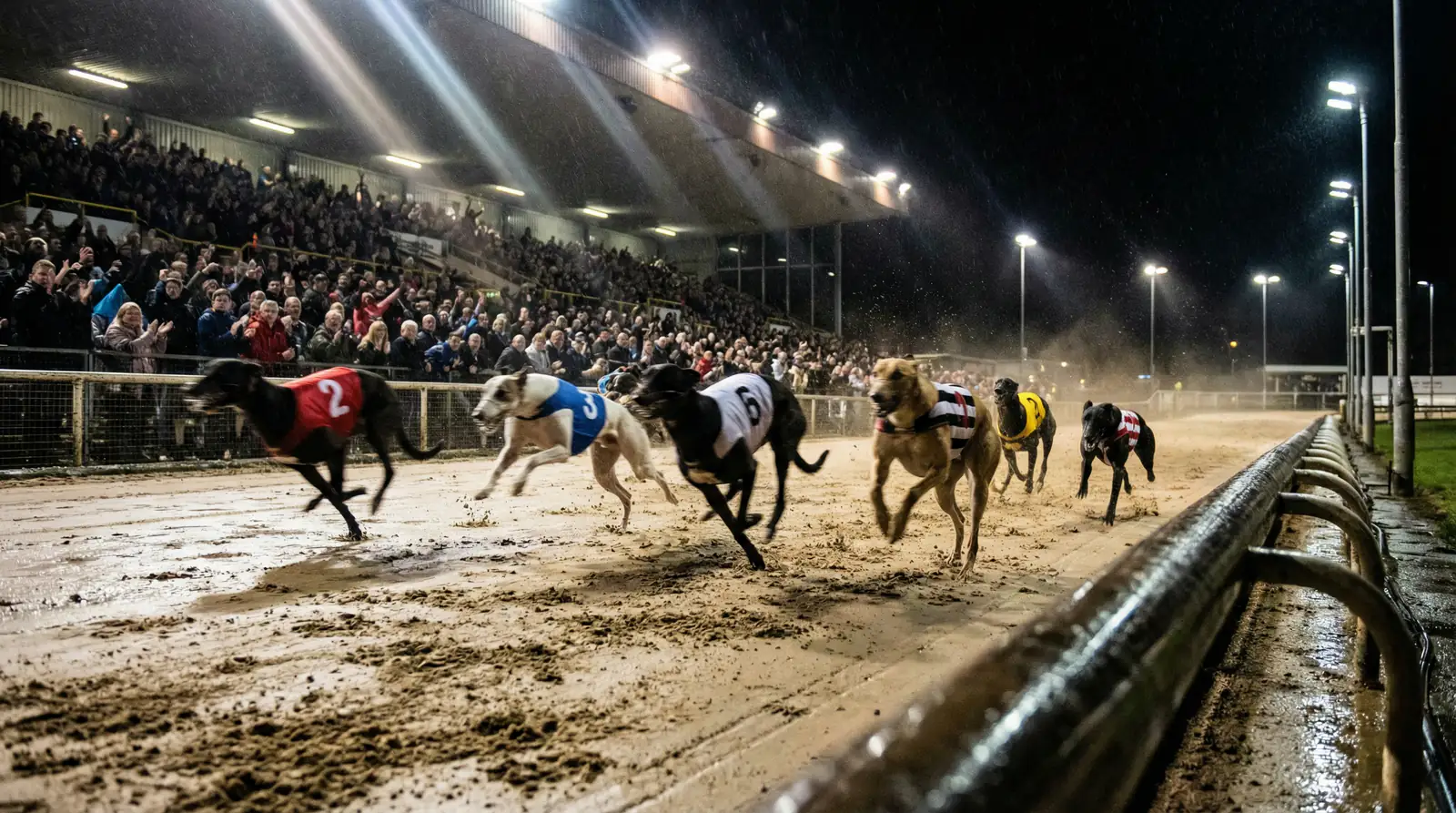
In-play greyhound markets are structurally different from in-play markets for any other sport, and understanding those structural differences is the prerequisite for using them intelligently. The entire race lasts 28–45 seconds. Within that window, the most consequential event — the first bend — occurs within the first three to five seconds. A dog that breaks cleanly from Trap 1 and hits the inside rail before the field converges has substantially improved its probability of winning in the time it takes most punters to process what they have seen on screen. The exchange price will have moved from 2/1 to 1/4 before a human hand has had time to click a button.
The speed of market movement in a greyhound in-play market is governed by algorithms rather than human traders. Betfair Exchange’s in-running greyhound prices are driven by automated bots that react to race footage in milliseconds — far faster than any human can observe, interpret, and act. By the time a human punter has identified that Trap 1 has broken well and decided to back it, the odds have already moved to reflect the first-bend advantage. This creates a specific dynamic: the in-play market is most useful for closing out or partially closing an existing position — using cash out on Betfair or fixed-odds bookmakers — rather than opening new positions based on live race reading.
There is a narrow exception for experienced greyhound traders who have pre-programmed automated strategies, but this is a specialist activity that requires technical infrastructure beyond the reach of recreational punters. The practical summary for most in-play greyhound bettors is: the pre-race position is your primary bet, and the in-play window is a risk management tool, not a primary entry point.
Which Bookmakers Offer In-Play Greyhound Betting
The majority of major UKGC-licensed bookmakers provide cash-out functionality on greyhound bets during the race, which is the form of in-play interaction most commonly used. Bet365, Betfair Sportsbook, William Hill, Ladbrokes, Coral, Paddy Power, and Sky Bet all offer in-race cash out on supported greyhound meetings. The availability of cash out on any specific race depends on the meeting being part of a supported broadcast — BAGS meetings at major tracks are almost universally covered, while smaller evening fixtures at less prominent venues may not trigger cash-out availability.
Betfair Exchange is the primary platform for genuine in-running greyhound market access in the UK. Exchange in-running markets are available for GBGB meetings where Betfair has the appropriate data feed and meeting classification, typically encompassing the main BAGS tracks and higher-profile evening fixtures. The in-running market on the exchange opens automatically at the start of the race and closes at the finish, with settlement following the official result. Price movements within the in-running window can be extreme — a leading dog at the second bend may be trading at odds-on even if it was 3/1 pre-race — and the liquidity available at any specific in-running price point is significantly lower than pre-race market depth.
Smarkets is the secondary UK exchange and provides in-running access for selected GBGB meetings, with generally lower liquidity than Betfair but occasionally better prices in less trafficked markets. For punters who regularly use both platforms, the price comparison between Betfair and Smarkets in the pre-race greyhound market is worth making before the off — in the in-running window the speed advantage of being on the platform with better liquidity matters more than the marginal price difference.
Speed of Suspension and Market Rules
Market suspension timing is the operational variable that defines whether in-play greyhound betting is functionally accessible for a given bet. On Betfair Exchange, in-running greyhound markets typically suspend automatically when the hare passes the traps — this is the trigger point that the exchange uses to manage the transition from pre-race to in-running status. The exact suspension mechanism is managed by Betfair’s in-house systems and can vary slightly by meeting, but the pattern is consistent enough that pre-race orders placed within the final 30 seconds before the off carry real risk of being unmatched when the market suspends.
For fixed-odds bookmakers, markets are suspended at the off and typically do not reopen during the race. The only interaction available during the race on most fixed-odds platforms is the cash-out calculation, which the platform updates in near-real-time based on its assessment of the current in-running position. Cash-out values can move rapidly during a race — a dog leading at the bend may see its cash-out value increase substantially, while a dog that has been impeded or has run wide may see its value collapse to near zero before the race is half over.
Non-runner rules apply to in-play markets: if a dog is a late withdrawal before the traps open, most bookmakers and exchanges will adjust the market prices or void the relevant portions of combination bets. The specific rules vary by operator and are documented in the greyhound betting rules section of each platform’s terms and conditions. For in-running markets specifically, Betfair Exchange’s rules around voids, abandoned races, and reruns are detailed in their exchange rules documentation at betfair.com — the rules around reruns are particularly relevant for greyhound racing, where the hare occasionally fails and meetings are occasionally abandoned mid-card.
Strategy for In-Play Dog Betting
Given the constraints above — narrow time windows, algorithmic price movement, and suspension mechanics that remove most of the decision space once the race starts — the most practically useful in-play strategy for greyhound bettors is not a live entry strategy but a live exit one. The pre-race analysis produces a view — a specific dog at a specific price that represents genuine value. Once the race starts, the question becomes whether the unfolding race confirms or contradicts that view, and whether it makes sense to cash out at the value currently offered rather than letting the bet run to settlement.
Cash out is worth considering in three specific scenarios. First: the dog you have backed breaks cleanly and leads into the first bend, compressing its odds to near-certain territory — taking cash out at that point locks in most of the potential profit while eliminating the risk of a late challenge or incident in the closing stages. Second: the dog you have backed experiences a first-bend incident — caught in traffic, impeded by another runner, or badly positioned at the turn — and its chance of winning has materially diminished. Cash out at a reduced value salvages part of the stake rather than losing it entirely. Third: you have backed a dog in a combination bet and one leg has won easily, and you want to lock in a partial return rather than risking the entire accumulated stake on the remaining legs.
The mathematical caution around cash out applies here as it does in all markets: the cash-out price offered by bookmakers incorporates their margin, meaning the expected value of taking cash out is slightly below the expected value of letting the bet run. Over a large sample of bets, systematic cash-out use will produce marginally lower returns than never using it. The practical justification for using it selectively — in the three scenarios above — is risk management rather than expected value maximisation. Know why you are taking cash out before you press the button.
Live Dog Markets Are Fast and Unforgiving
In-play greyhound betting is real, available, and occasionally useful — but it rewards the punter who uses it as a risk management extension of their pre-race analysis, not the one who treats it as an alternative to having a view before the traps open. The race is over in 30 seconds, the market moves in milliseconds, and the window for adding anything meaningful to your position once the hare starts moving is genuinely small.
Pre-race preparation is where greyhound betting is won or lost. The in-play window is the last 30 seconds of a decision you should have made before the card went up. If you find yourself making significant betting decisions after the race has started, the more productive question is why the pre-race analysis did not produce a clear enough view to act on confidently before the off.