

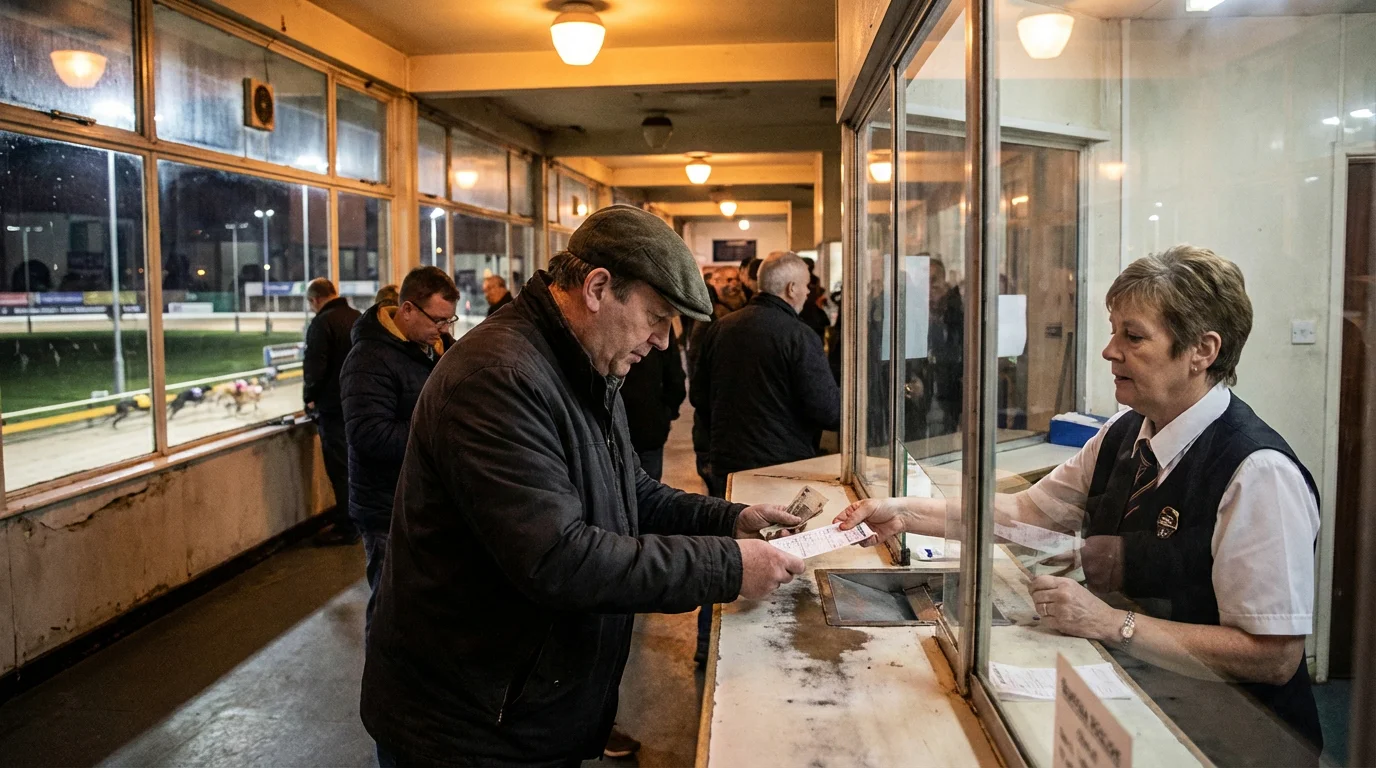
How Pool Betting Works on Greyhounds
Pool betting — or Tote betting — operates on a fundamentally different principle to fixed-odds wagering. Instead of backing a selection at a price set by a bookmaker, you are placing money into a shared pool alongside every other punter making the same type of bet on the same race. After the race, the total pool is divided among the winning tickets, with the Tote operator retaining a percentage — typically 16–25% depending on the bet type — before distributing the remainder. The price you receive is not known until the pool closes; it is determined by how much money entered the pool and how many winning tickets share the dividend.
The practical implication is that Tote dividends are unpredictable. A bet that would pay 4/1 with a fixed-odds bookmaker might return 3/1 on the Tote if the pool is heavily backed by other punters toward the same selection, or 6/1 if the winning dog was lightly supported and the money in the pool was spread more evenly. This variability is the defining feature of pool betting, and it creates both opportunities and traps that are specific to the format.
UK greyhound Tote betting is operated primarily through the Tote — the trading name that Betfred acquired when it purchased the on-course Tote operations — and through on-track pool facilities at GBGB-licensed venues. Online access to greyhound Tote pools is available through Betfred’s platform and through a small number of other licensed operators that aggregate into Tote pool markets. The pools for BAGS meetings are smaller than those for major evening fixture cards, which has direct consequences for the dividend stability discussed later in this article.
For most standard BAGS races, the Tote offers win and place pools as the baseline markets. The win pool pays a single dividend to backers of the winning dog. The place pool pays dividends to backers of any dog finishing in the paid places — typically first and second in a six-runner race, consistent with the each-way place terms used by fixed-odds bookmakers. Beyond these basics, the greyhound Tote offers a small number of sequential pool bets that operate across multiple races rather than individual events.
The Greyhound Jackpot
The Greyhound Jackpot is the headline pool bet in UK dog racing — it requires you to select the winner of six consecutive nominated races at a specific meeting. Pick all six correctly and you share the Jackpot pool. If no ticket picks all six winners, a portion of the pool rolls over to the next designated Jackpot meeting, building the prize until someone cleans it out or a consolation dividend is triggered.
The Jackpot is simultaneously the most appealing and most structurally demanding Tote bet on greyhounds. Six consecutive correct selections in a six-runner field — where even the clearest short-priced favourite in any individual race has a roughly 40% chance of winning — produces an expected single-ticket hit rate in the region of one in several hundred attempts. The consolation dividend, paid when the pool rolls over and no full ticket is found, typically covers a smaller number of correct selections — often five from six — and is the more realistic target for punters not using multiple-selection combination tickets.
Where the Jackpot gains its appeal is when the pool has rolled over multiple times. A Jackpot pool that has accumulated over several meetings because no ticket found all six winners represents a significant overlay relative to the true combined probability of the six-race sequence. The rollover inflates the prize without proportionally inflating the probability of winning, which means the expected return on a Jackpot ticket improves when the pool is large. Experienced Tote bettors track Jackpot rollover histories precisely for this reason — the same six-race prediction is a structurally better bet when the prize pool is large than when it is being contested fresh with a minimal starting guarantee.
Placepot on Dogs
The Placepot is the most widely bet Tote sequential pool product in UK racing, and it translates well to greyhounds. Rather than picking the winner of each leg, you are selecting a dog to finish in the paid places in each of six nominated races. In a standard six-runner greyhound field, the paid places for Placepot purposes are typically first and second — consistent with the Tote’s place pool terms — which means you need a selection that runs into the top two in each leg.
The Placepot is more forgiving than the Jackpot precisely because you have two bites at each race rather than one. In a competitive six-runner field, identifying two dogs with a realistic chance of finishing in the top two is a much more achievable task than predicting the winner — particularly on grades where the form is tight and several dogs have similar sectional times. The dividend, accordingly, is lower than the Jackpot but more frequently won, and the consolation structure — paying out for five from six placed selections — means a near-complete ticket is rarely a total write-off.
The cost of a Placepot is a function of how many selections you make per leg. A single selection per leg costs one unit stake across six legs. Two selections in one leg and one in all others doubles your coverage in that race and doubles the total cost. Using three selections per leg across all six legs produces 3⁶ = 729 combinations — a meaningful financial commitment that requires realistic dividend expectations before it makes sense. Most recreational Placepot players use one or two selections per leg, keeping the cost manageable while accepting that a tight single selection in one leg is the most common route to losing an otherwise well-constructed ticket.
Tote vs Fixed Odds: When Pool Wins
The question of whether to use the Tote pool or a fixed-odds bookmaker for a specific greyhound bet is not a matter of general preference — it is a calculation that changes race by race and depends on the structure of the pool, the composition of the market, and how the bookmaker is pricing the race relative to the true probabilities.
Tote pool betting on greyhounds tends to favour the punter in one specific scenario: when the winning dog was not heavily supported in the pool. In practical terms, this means the winning dog was either an outsider or a mid-range runner that the betting public had underweighted. When a 10/1 shot wins a race where the pool was dominated by money on the 5/4 favourite, the winners share a relatively small number of winning tickets from a full pool — the dividend can substantially exceed the fixed-odds SP. This is the classic Tote advantage, and experienced pool bettors specifically look for races where they believe the pool underestimates a runner’s probability of winning.
Fixed odds are generally superior when the market is efficient and the pool is likely to produce a dividend close to or below the fixed-odds price. This happens consistently when favourites win — the pool is heavily backed toward them, the winning tickets are numerous, and the divided pool produces a lower dividend per ticket than the fixed-odds SP would have returned. It also happens when the pool is small, which amplifies the effect of any imbalance: a small BAGS pool where 60% of the money is on one dog will produce a particularly compressed dividend if that dog wins.
The Placepot and Jackpot sit outside this simple comparison because they do not have direct fixed-odds equivalents. Sequential combination bets on six consecutive greyhound races simply do not exist in the fixed-odds market, so the Tote’s pool format is the only vehicle for this type of bet. The comparison is only relevant for individual race win and place bets, where both formats are competing for the same bet.
How to Place Tote Bets Online
Online Tote betting on greyhounds is available through Betfred, which operates the main UK Tote pool for both horse racing and greyhound racing. The Tote pools for GBGB-licensed greyhound meetings are accessible on Betfred’s website and app under the Tote section, where you can see the current pool size, the available bet types, and the race-by-race schedule for sequential bets like the Placepot and Jackpot.
To place a win or place Tote bet on a single greyhound race, the process is the same as any fixed-odds bet: select the race, choose the Tote market type from the available options, select your dog, enter your stake, and confirm. The bet slip will show an estimated dividend range where available — though this is indicative only, as the final dividend depends on total pool volume at close. Settlement occurs automatically after the official result, and the dividend is applied to your winning stake.
For the Placepot, the interface typically prompts you to make one selection per leg across all six designated races before confirming the full ticket. Most platforms allow you to select multiple dogs per leg on a single ticket — the total number of combinations and the total stake are calculated and displayed before you confirm. It is worth reviewing the combination count before submitting, particularly if you have made multiple selections in several legs, as the total cost can increase quickly beyond what a single-glance review of the bet slip suggests.
The one operational point that catches many first-time Tote greyhound bettors is the closing time for sequential pool bets. The Placepot and Jackpot pools close before the first leg of the sequence begins — typically a few minutes before the first race. If you are constructing a Placepot ticket and a late runner change or non-runner affects one of your legs before the pool closes, the selection in the affected leg is typically substituted by the Tote’s rules — check the operator’s specific terms for how this is handled. After the pool closes, no further entries are accepted.
Pool or Fixed — Know Before You Pick
Tote pool betting on greyhounds is not a replacement for fixed-odds betting — it is a different tool for different scenarios. Sequential bets like the Placepot and Jackpot exist only in pool format and offer a type of multi-race engagement that no fixed-odds product matches. For individual race win and place bets, the pool is worth considering when you believe the market is overweighting a runner and the pool reflects that — but fixed-odds will often be the better price when the market is working efficiently.
The discipline required is simple: before you place a Tote win bet, check the fixed-odds price on the same runner. If the estimated Tote return is materially higher, use the pool. If it is lower or comparable, take the fixed-odds option. Over time, developing a sense for which races tend to produce Tote overlays — which is largely a function of race grade, pool size, and the running style of the likely winner — is the analytical layer that separates a punter using pool betting strategically from one using it out of habit.
